
Anaheim Sustainability Education Center Design-Build
The Sustainability Education Center addresses the challenge of educating the public on sustainability through an interactive, real-world demonstration environment. The project integrates renewable energy systems, water conservation strategies, and hands-on exhibits to promote environmental awareness and community engagement in Anaheim.
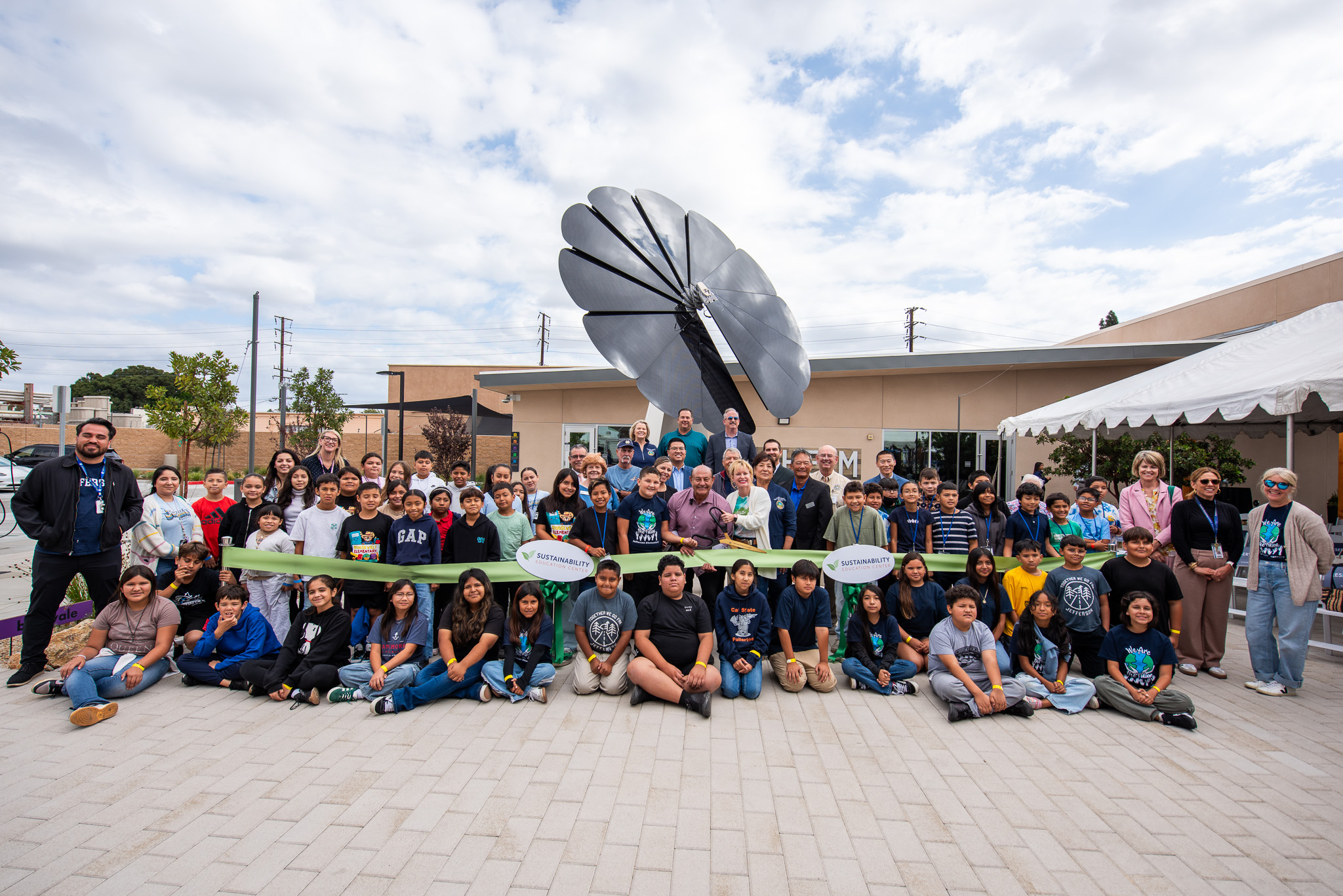
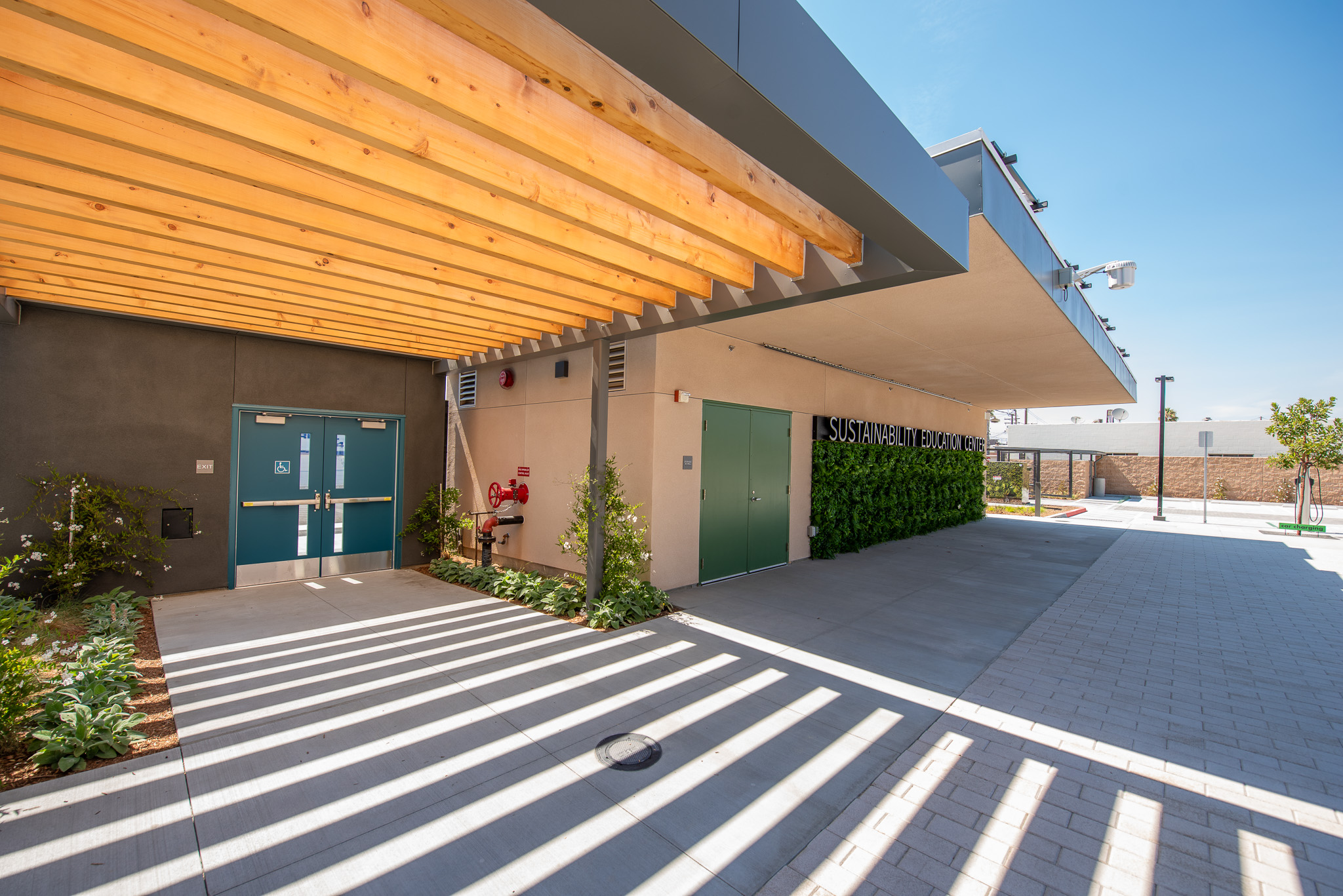
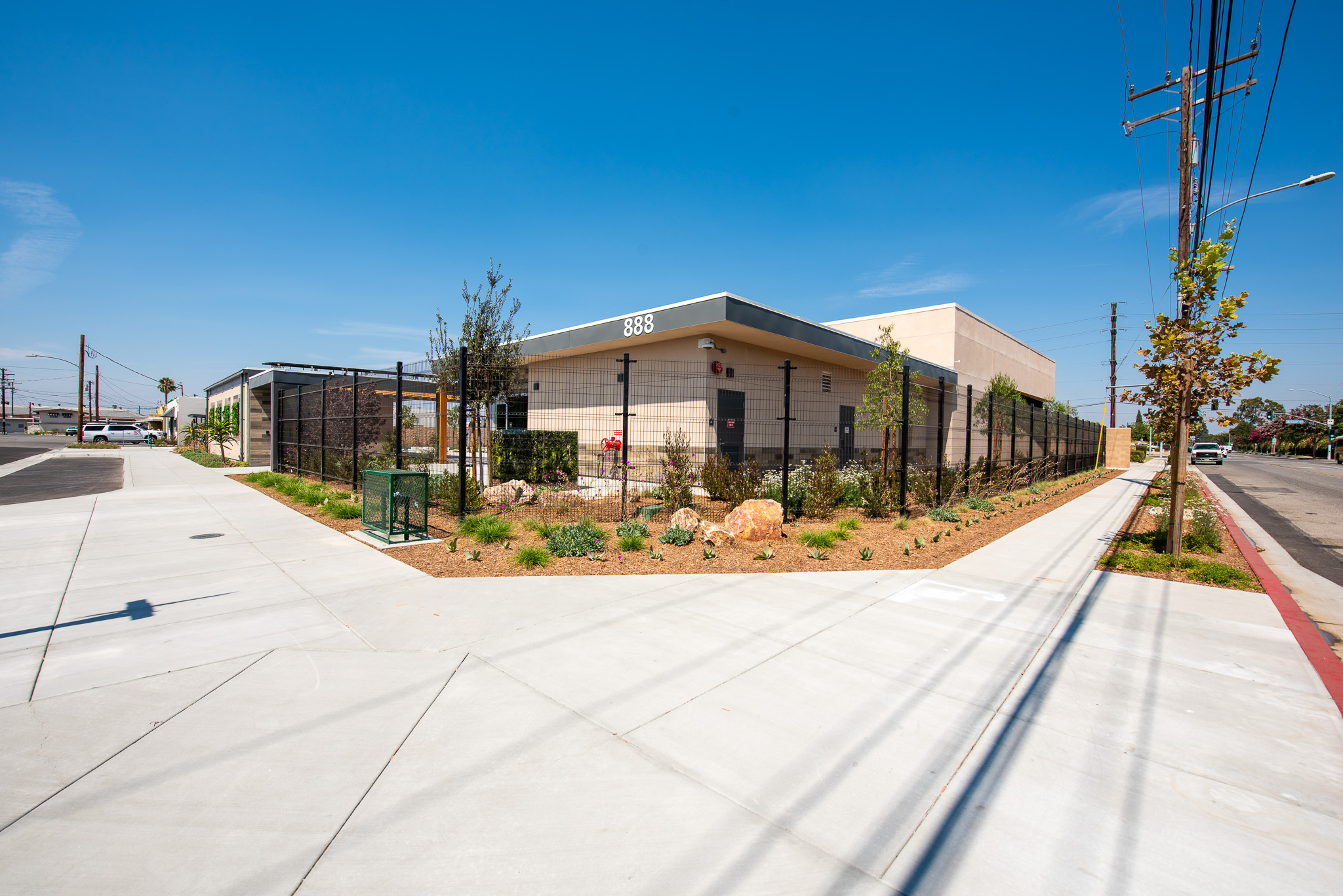

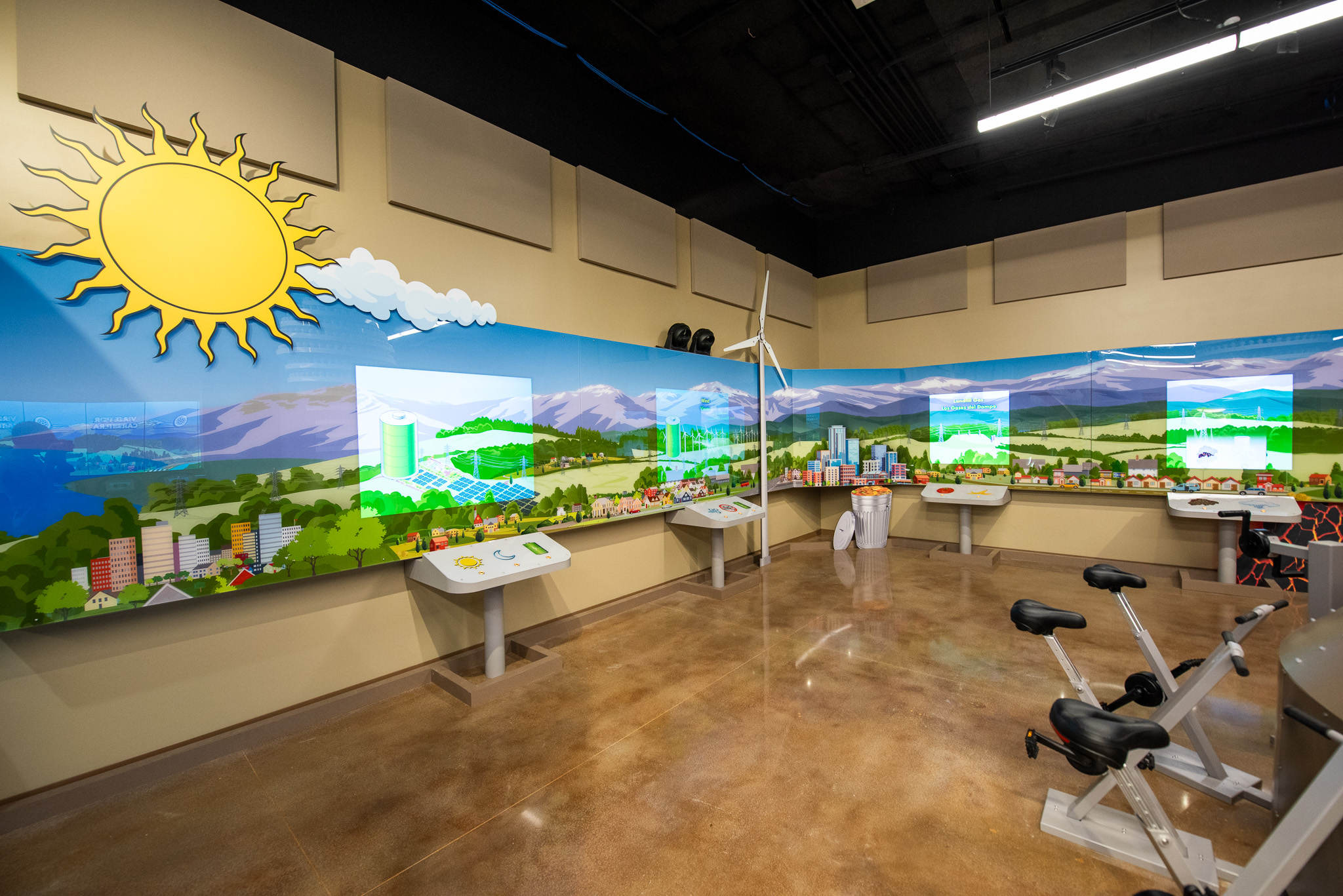
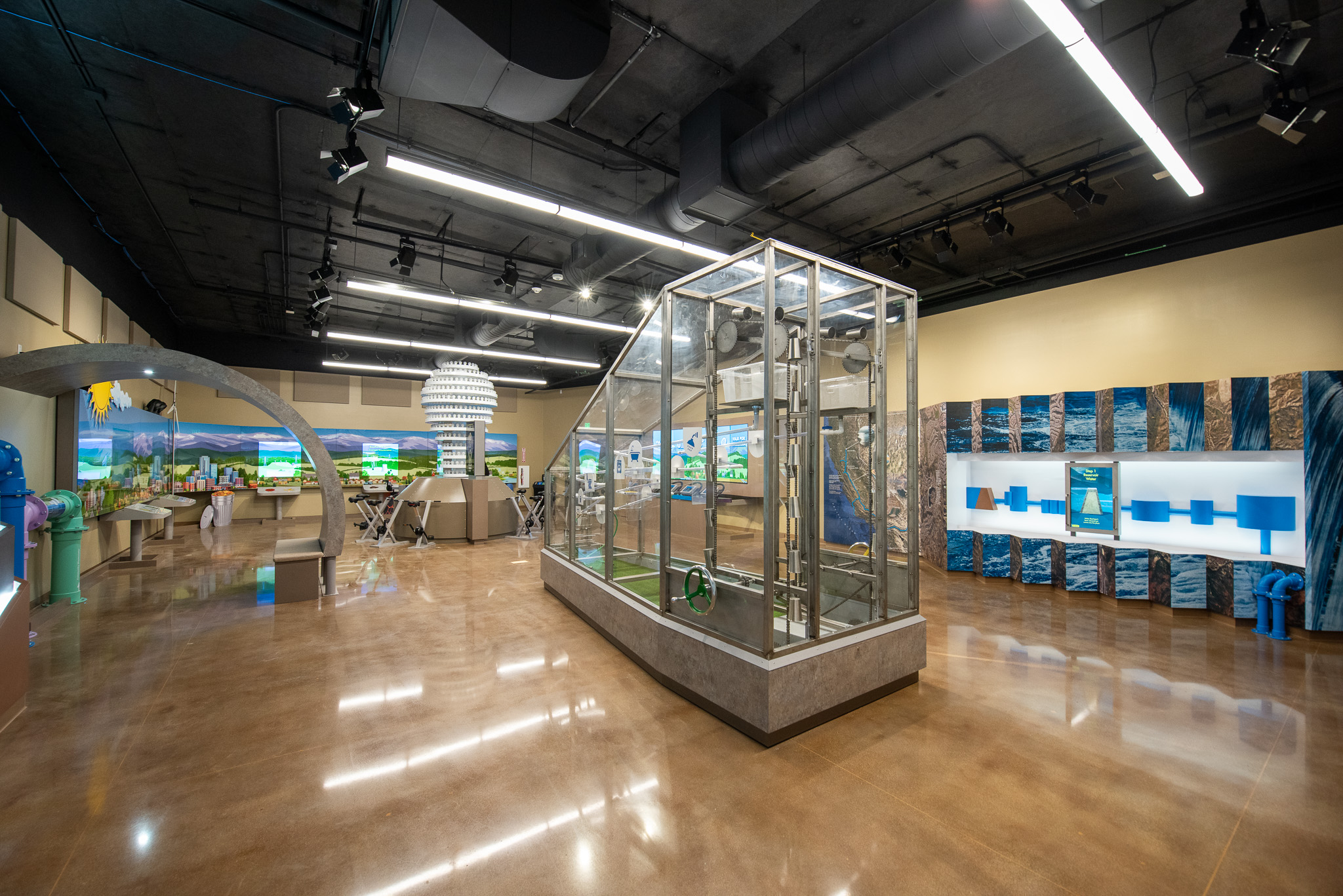
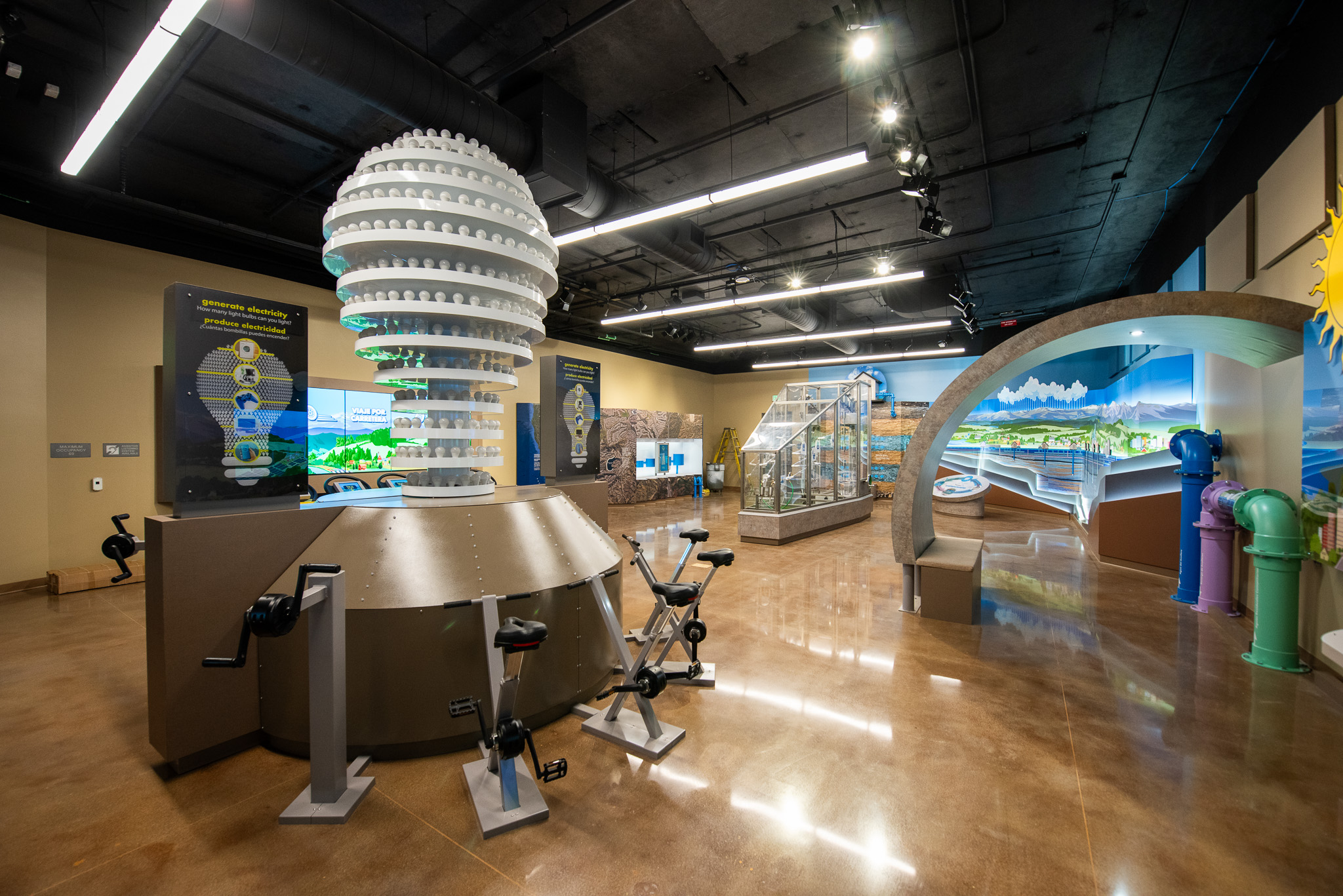
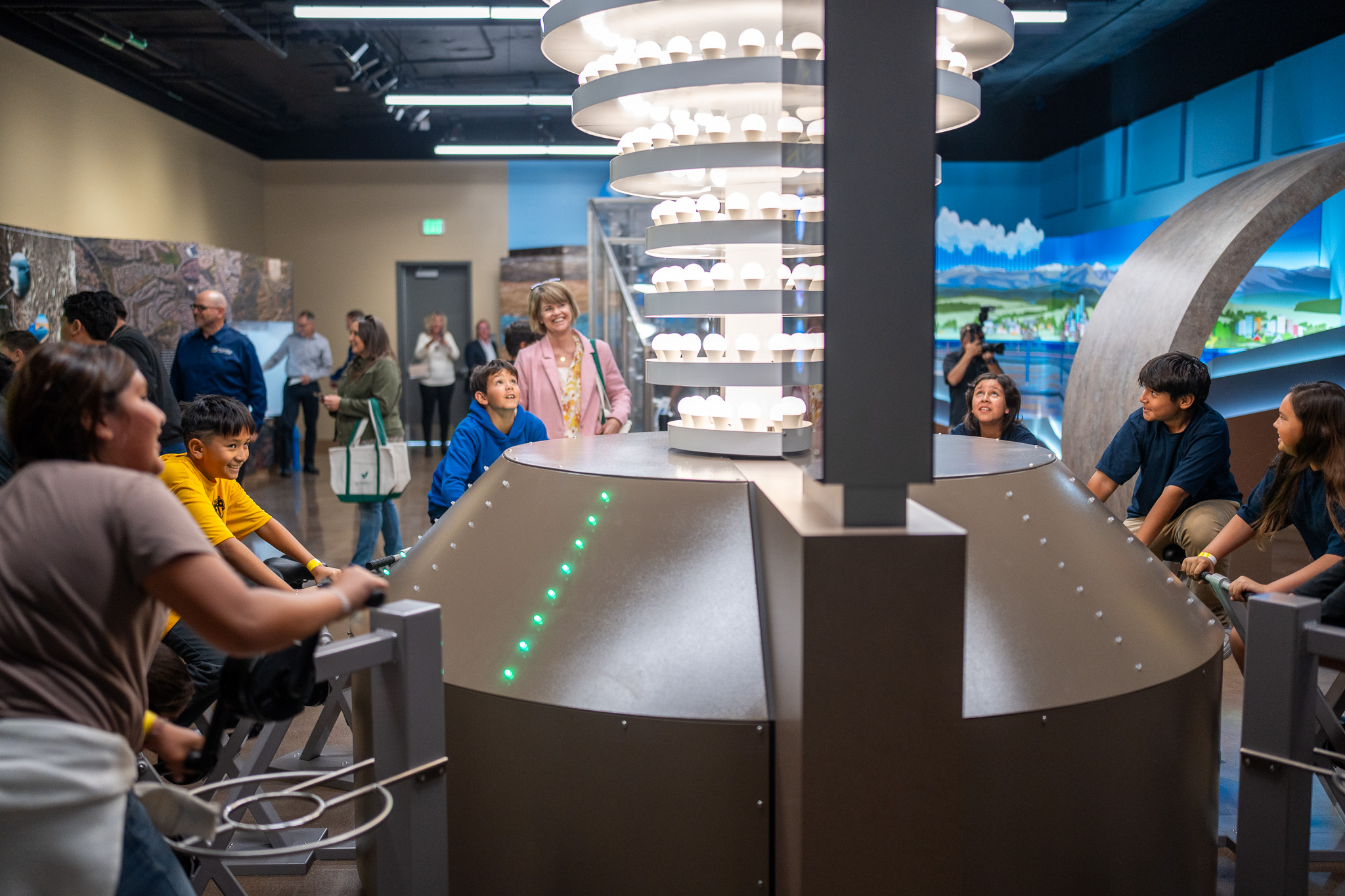
The project is a design-build partnership between Oltmans Construction Co. and SVA Architects. The Sustainability Education Center is a 8,760-s.f. single-story, stick-frame, and stucco facility that addresses the challenge of educating the public on sustainability through an interactive, real-world demonstration environment. The project integrates renewable energy systems, water conservation strategies, and hands-on exhibits to serve as Anaheim Public Utilities’ new flagship educational demonstration center and will support the Anaheim community through hands-on learning, help transition the community to a lower carbon future, and continue efforts to support local students with workforce development opportunities in the sustainability and utility career sector.
Design-Build Delivery
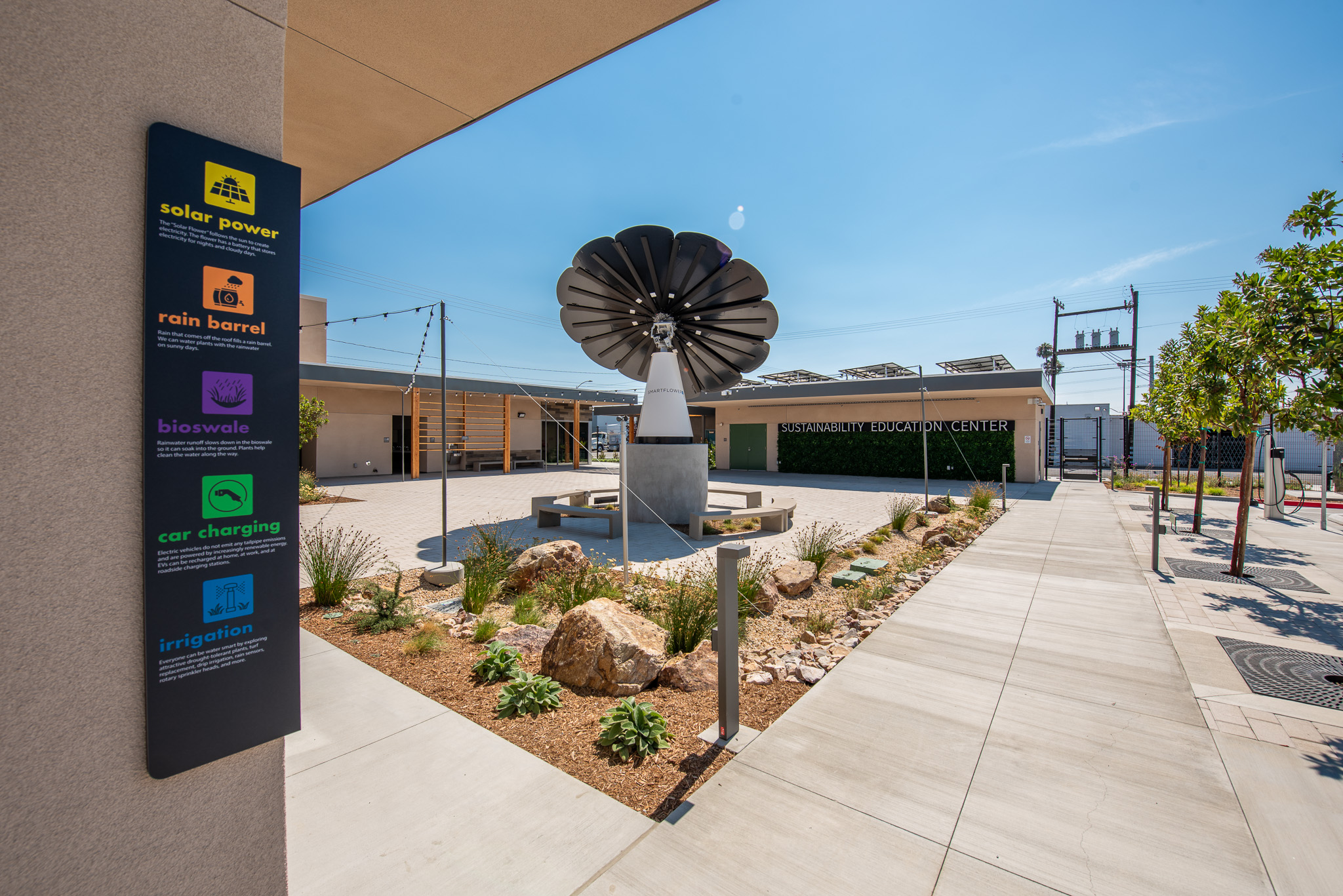
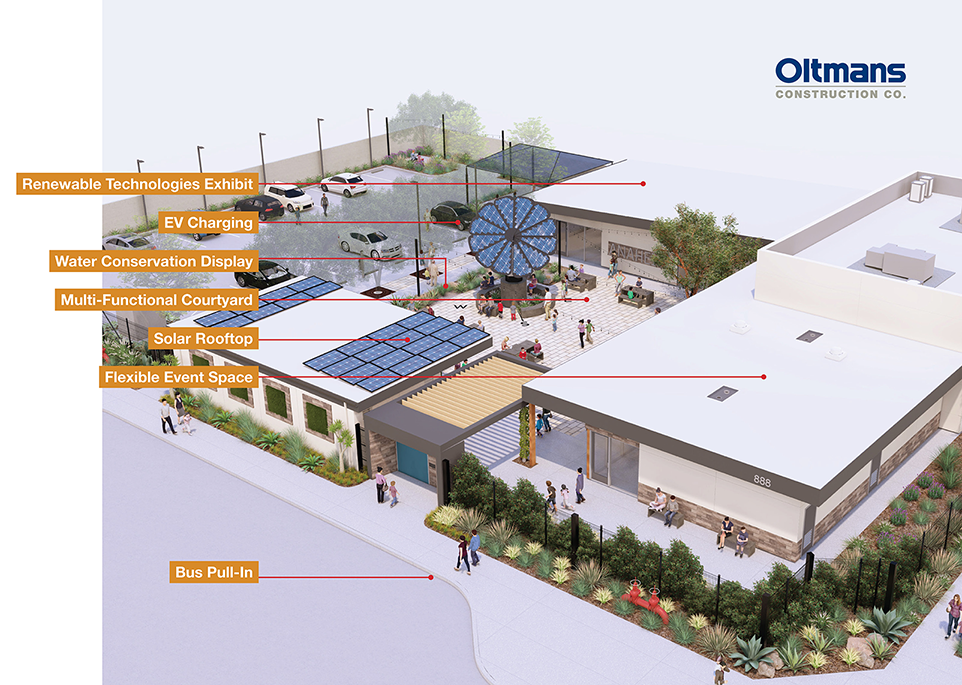
The project transforms sustainability from an abstract concept into a tangible, interactive experience. An incredibly successful application of the design-build delivery process, every component of the site is intentionally designed to serve both infrastructure and instruction. Residents and visitors do not simply learn about sustainable systems — they experience them firsthand through visible, working demonstrations of renewable energy, water stewardship, and low-impact site design. Features include solar power generation, EV charging infrastructure, rainwater capture systems, permeable paving, drought-tolerant landscaping, and a utility-themed exhibit hall designed to make complex environmental solutions engaging, understandable, and accessible to the public. Together, these elements support Anaheim Public Utilities’ long-term vision of educating residents on the environmental challenges facing the City and promoting the adoption of immediate knowledge that they can apply in their own homes, businesses, and neighborhoods.
A Living Laboratory
What distinguishes this project is its “living laboratory” approach. Rather than concealing sustainable systems, the design intentionally exposes and interprets them. Renewable energy generation, water management, and EV charging infrastructure, each advancing technologies that align with long term public need and are integrated as active teaching tools, transforming building systems into interactive exhibits. Further, the exhibit hall features 10 interactive displays on energy and water concepts, including renewable energy systems, water infrastructure, and electric transportation.
Sustainability Attributes:
- 11.34 kW DC STC / 17.3 kW AC rooftop solar photovoltaic system supporting on-site renewable energy generation
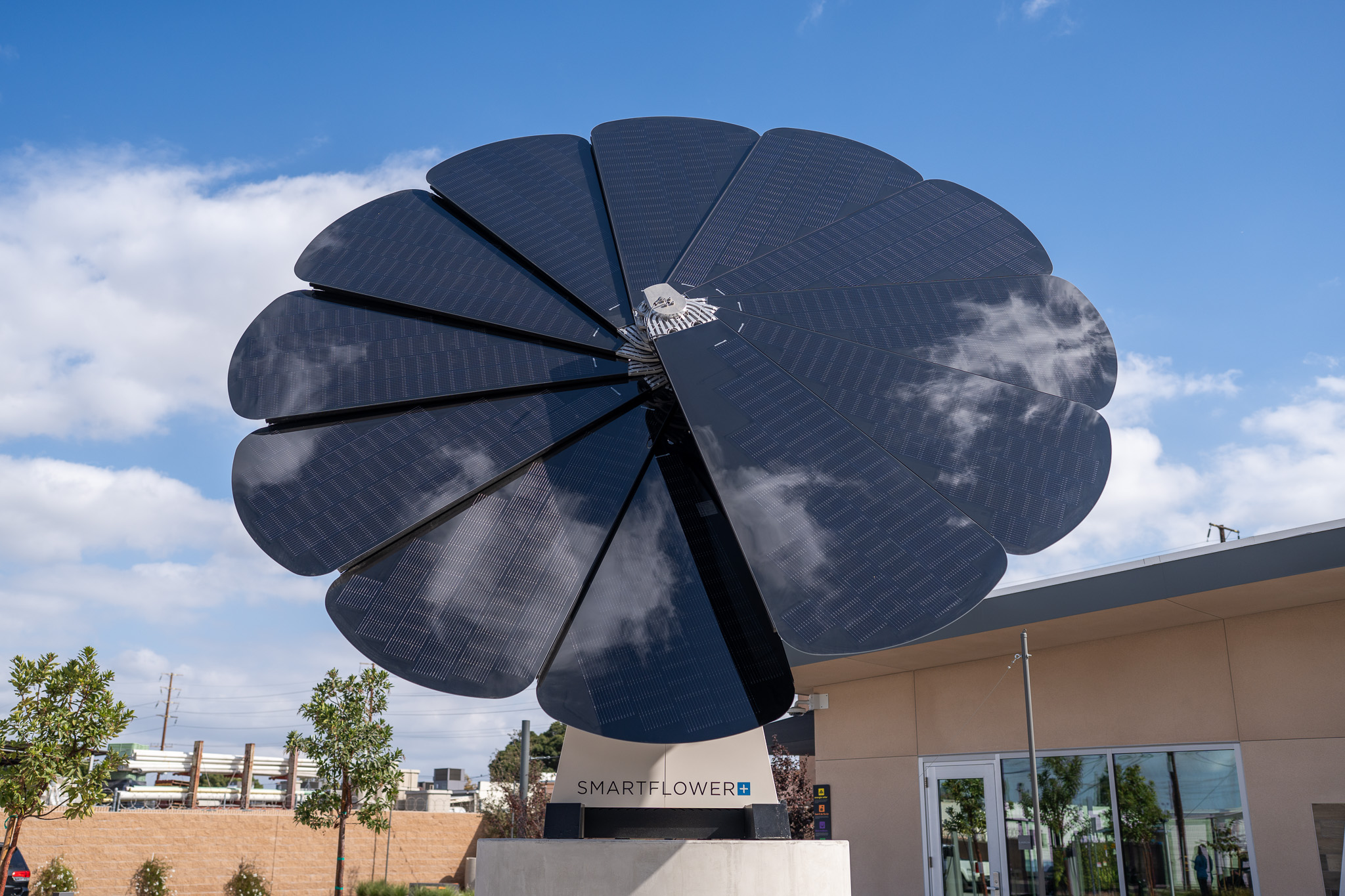
- 2.5 kW SmartFlower solar exhibit demonstrating alternative energy production and tracking the sun throughout the day
- Dual EV charging stations and supporting infrastructure encouraging zero-emission transportation
- Designated concrete school bus pull-in area to safely accommodate school field trips and group transportation
- Permeable pavers to manage storm water runoff and promote groundwater recharge
- Drought-tolerant and native landscaping designed to minimize potable water use
- Rainwater capture through rain barrels integrated into the landscape design to collect roof runoff for irrigation reuse, demonstrating water-conservation and stormwater-management strategies.
- Energy-efficient lighting and building systems reduce operational energy consumption.
- Acoustic wall and ceiling panels enhance indoor environmental quality by improving acoustic comfort in exhibit and learning spaces, supporting LEED goals for occupant well-being.
- Durable, low-maintenance exterior materials selected to extend building lifecycle performance and reduce long-term resource consumption.
- Material selections were driven by life-cycle analysis discussions.
Awards
- 2026 PCBC Gold Nugget Judges Special Award of Excellence
- ENR Best Regional Project - Award of Merit - Small Project & Sustainability